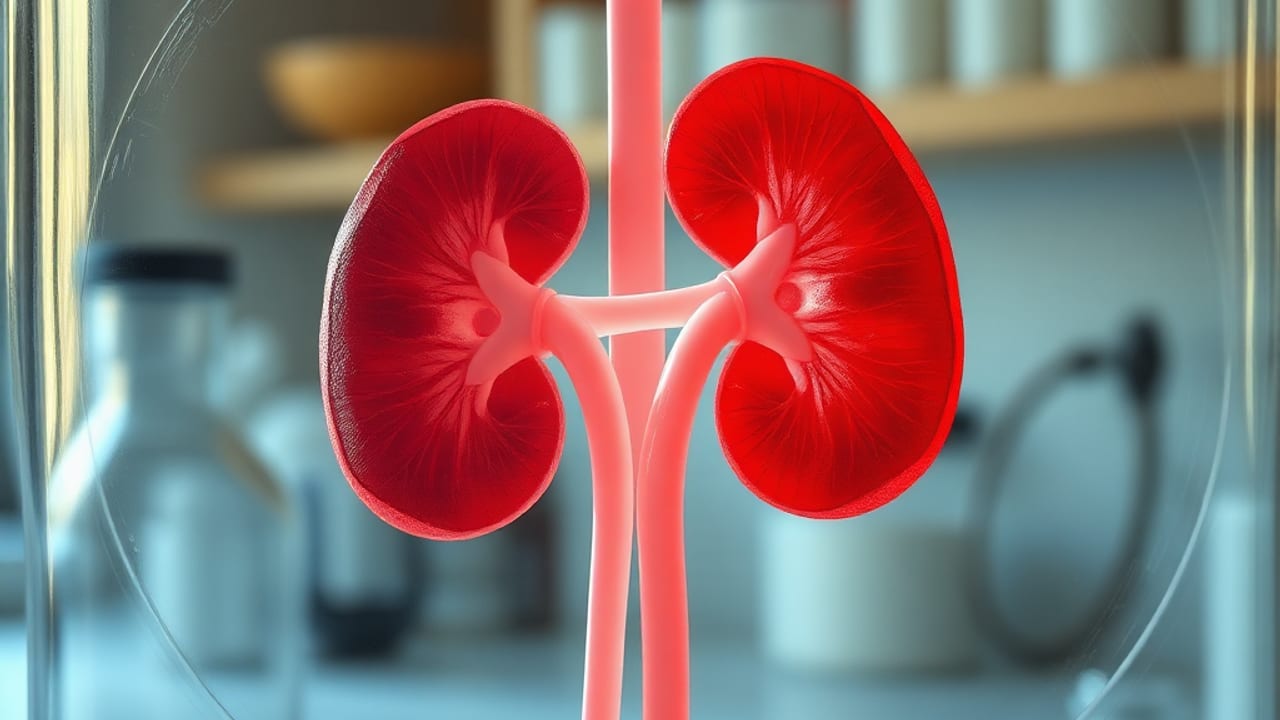
Your Kidneys Are Trying to Tell You Something (And It's Not What You Think)
On this page
- What High Blood Sugar Actually Does to Your Kidneys
- The Part Doctors Don't Say Out Loud
- Real Case: Kumar, Age 62
- Real Case: Fatimah, Age 57
- Why This Isn't Common Knowledge
- What Happens When Insulin Resistance Reverses
- The Difference Between Slowing and Reversing
- What Your eGFR Number Actually Means
- The Signs Your Kidneys Are Struggling
- What You Should Know
- The Bottom Line
Elevated blood sugar can damage the delicate blood vessels in your kidneys, leading to a decline in kidney function. Learn how addressing insulin resistance can help improve kidney health.

Your doctor just told you your kidney function dropped.
eGFR: 58
"Early stage kidney disease," they said.
"We'll monitor it."
You walked out with a pamphlet about dialysis and a referral to a nephrologist.
But here's what nobody explained:
Your kidneys aren't failing randomly.
They're drowning in glucose.
What High Blood Sugar Actually Does to Your Kidneys
Your kidneys are filters.
Every day, they process about 180 liters of blood.
They're supposed to filter out waste and keep the good stuff in.
But when your blood sugar is constantly elevated, something breaks down.
Glucose is sticky.
It damages the tiny blood vessels in your kidneys (called glomeruli).
Over time, those vessels get scarred.
Hardened.
Less able to filter.
That's why your eGFR drops.
That's why protein starts showing up in your urine.
Your kidneys aren't diseased.
They're damaged by metabolic overload.
The Part Doctors Don't Say Out Loud
Once kidney damage starts, the standard approach is:
"Manage your blood sugar better. Take your medications. Prepare for the possibility of dialysis."
But here's the truth:
Early-stage kidney damage can improve.
I've seen it happen repeatedly.
Patients with eGFR in the 50s climbing back to the 70s and 80s.
Protein in the urine disappearing.
Creatinine levels normalizing.
Not through medications.
Through reversing the root cause: insulin resistance.
Real Case: Kumar, Age 62
Starting point:
- Type 2 diabetes for 14 years
- eGFR: 52 (Stage 3 kidney disease)
- Proteinuria (protein in urine)
- HbA1c: 9.3%
- On dialysis "watch list"
His nephrologist told him: "You'll probably need dialysis in 3-5 years. Start preparing."
He came to me asking if there was anything else he could do.
We addressed his insulin resistance.
Not with more medications.
By correcting the metabolic dysfunction driving the damage.
Six months later:
- eGFR: 68
- No more protein in urine
- HbA1c: 6.2%
- Off the dialysis watch list
His nephrologist was stunned.
"I've never seen kidney function improve like this," he said.
Kumar told me: "I thought my kidneys were done. Nobody told me they could heal."
Real Case: Fatimah, Age 57
Starting point:
- eGFR: 47
- Chronic kidney disease Stage 3B
- Swelling in her legs
- HbA1c: 8.9%
Her doctor said: "Your kidneys are declining. We need to slow this down as much as possible."
Eight months later:
- eGFR: 61
- Swelling gone
- HbA1c: 5.8%
- Kidney function improved by 30%
She said: "I was planning my life around dialysis. Now I'm planning trips with my grandchildren."
Why This Isn't Common Knowledge
Because the medical system is built on managing decline, not reversing it.
Nephrologists are trained to slow progression.
Not reverse damage.
But when you fix insulin resistance, the kidneys often respond.
The glucose load drops.
The inflammation decreases.
The blood vessels start healing.
The kidneys get a chance to recover.
What Happens When Insulin Resistance Reverses
Your blood sugar stabilizes.
Your blood pressure improves (less strain on kidney vessels).
Inflammation drops throughout your body.
Your kidneys stop being flooded with excess glucose.
And in many cases, kidney function improves.
Not always back to perfect.
But often significantly better than where it started.
The Difference Between Slowing and Reversing
Standard care: Slow the decline
- Medications to control blood sugar
- Medications to control blood pressure
- "Kidney-friendly diet"
- Monitoring as function drops
- Eventual dialysis
Root-cause approach: Reverse the damage
- Address insulin resistance
- Remove metabolic stress on kidneys
- Allow cellular repair
- Kidney function improves
- Dialysis avoided
One is damage control.
The other is healing.
What Your eGFR Number Actually Means
eGFR above 90: Normal kidney function
eGFR 60-89: Mild reduction (often still reversible)
eGFR 45-59: Stage 3A kidney disease (can often improve)
eGFR 30-44: Stage 3B (harder but not impossible to reverse)
eGFR 15-29: Stage 4 (severe, approaching dialysis)
eGFR below 15: Stage 5 (dialysis or transplant needed)
Most people I work with are in Stage 2-3.
That's the window where improvement is most possible.
The Signs Your Kidneys Are Struggling
- Swelling in your feet, ankles, or face
- Foamy urine (sign of protein leaking)
- Fatigue that doesn't improve with rest
- High blood pressure that's hard to control
- Nausea or loss of appetite
- Trouble concentrating
These aren't just "diabetes symptoms."
These are your kidneys asking for help.
What You Should Know
1. Early kidney damage is often reversible
If you're in Stage 1-3, there's significant room for improvement.
2. Your doctor might not mention reversal
Most nephrologists are trained to manage, not reverse.
Ask about it anyway.
3. Blood sugar control matters more than anything
Every point your HbA1c drops reduces kidney stress significantly.
4. Blood pressure is the second-most critical factor
High blood pressure accelerates kidney damage.
Lowering it (through metabolic correction, not just medications) protects your kidneys.
5. You need a doctor who believes improvement is possible
If your doctor says "kidneys only get worse," find one who knows better.
The Bottom Line
Your kidneys aren't irreversibly broken.
They're damaged by years of metabolic overload.
And when you reverse that overload, they often heal.
Not always completely.
But often enough to avoid dialysis.
Enough to improve quality of life.
Enough to give you years back.
I've seen 52-year-olds told they'd need dialysis by 55 still medication-free at 60.
I've seen eGFR numbers climb 20-30 points.
I've seen proteinuria disappear.
Not through miracles.
Through correcting what was broken in the first place.
Your kidneys are trying to tell you something.
The question is: are you listening?
Common questions
Frequently asked questions
What causes kidney function to drop?
Kidney function can drop when constant high blood sugar damages the tiny blood vessels in the kidneys, called glomeruli, causing them to scar and become less efficient at filtering waste.
Can early stage kidney damage be improved?
Yes, early stage kidney damage can often improve by reversing the root cause, which is insulin resistance, leading to better kidney function and reduced protein in the urine.
What is eGFR and what does a drop mean?
eGFR, or estimated glomerular filtration rate, measures how well your kidneys are filtering waste. A drop in eGFR indicates reduced kidney function, and numbers between 60 and 89 can suggest a mild reduction that may be reversible.
What are the signs my kidneys might be struggling?
Signs that your kidneys are struggling can include swelling in your feet, ankles, or face, foamy urine, fatigue, high blood pressure that's hard to control, nausea, or trouble concentrating.