What Is Diabetes? Understanding Type 1 and Type 2 Diabetes
Diabetes is one of the most common chronic health conditions worldwide, yet many people do not fully understand what it is. Learn how diabetes develops, the differences between Type 1 and Type 2 diabetes, common symptoms, risk factors, diagnosis, and treatment.

What Is Diabetes? Understanding Type 1 and Type 2 Diabetes
Diabetes is one of the most common chronic health conditions worldwide, affecting hundreds of millions of people. Despite its prevalence, many people are still unsure about what diabetes actually is, how it develops, and why there are different types of diabetes.
While both Type 1 diabetes and Type 2 diabetes cause high blood sugar levels, they are fundamentally different diseases with different causes, treatments, and long-term management strategies.
Understanding these differences can help you recognise the warning signs early, reduce your risk where possible, and seek timely medical care.
What Is Diabetes?
Diabetes mellitus is a chronic condition that affects how your body regulates blood glucose (blood sugar).
Glucose is the body's primary source of energy. Every time we eat carbohydrates such as rice, bread, fruits, or noodles, our digestive system breaks them down into glucose, which enters the bloodstream.
To move this glucose into our body's cells where it can be used as energy, we need a hormone called insulin.
Insulin is produced by the pancreas, an organ located behind the stomach.
When the body does not produce enough insulin—or cannot use insulin effectively—glucose remains in the bloodstream instead of entering the cells. This causes blood sugar levels to rise.
Persistently high blood sugar can damage many organs throughout the body, including:
- Heart
- Blood vessels
- Eyes
- Kidneys
- Nerves
- Brain
Without proper treatment, diabetes may lead to complications such as heart disease, stroke, kidney disease, blindness, nerve damage, and poor wound healing.
Understanding Insulin
A simple way to understand insulin is to think of it as a key.
Imagine every cell in your body is a locked room.
Glucose is trying to enter the room to provide energy, but it cannot open the door on its own.
Insulin acts as the key that unlocks the door, allowing glucose to enter the cell.
When insulin is missing—or when the body's cells stop responding properly to insulin—the glucose cannot enter efficiently.
Instead, it builds up in the bloodstream, causing high blood sugar.
This is the underlying problem in diabetes.
Type 1 Diabetes
What Is Type 1 Diabetes?
Type 1 diabetes is an autoimmune disease.
Normally, our immune system protects us from bacteria and viruses.
However, in people with Type 1 diabetes, the immune system mistakenly attacks the insulin-producing beta cells in the pancreas.
Over time, these cells are destroyed, meaning the pancreas produces little or no insulin.
Because insulin is essential for survival, people with Type 1 diabetes require lifelong insulin therapy.
Who Gets Type 1 Diabetes?
Type 1 diabetes is often diagnosed during childhood or adolescence, which is why it was once called juvenile diabetes.
However, it can develop at any age, including adulthood.
Importantly, Type 1 diabetes is not caused by eating too much sugar or by an unhealthy lifestyle.
Researchers believe it develops due to a combination of:
- Genetic factors
- Autoimmune responses
- Environmental triggers such as certain viral infections
The exact cause is still being studied.
Symptoms of Type 1 Diabetes
Symptoms often appear suddenly and can worsen within days or weeks.
Common symptoms include:
- Excessive thirst
- Frequent urination
- Extreme hunger
- Unexplained weight loss
- Fatigue
- Blurred vision
- Nausea or vomiting
- Fruity-smelling breath
If left untreated, Type 1 diabetes can lead to diabetic ketoacidosis (DKA), a life-threatening medical emergency that requires immediate treatment.
Treatment for Type 1 Diabetes
People with Type 1 diabetes need insulin every day because their bodies can no longer produce it.
Treatment usually includes:
- Insulin injections or an insulin pump
- Regular blood glucose monitoring
- Continuous Glucose Monitoring (CGM), when appropriate
- Healthy eating
- Regular physical activity
- Routine medical follow-up
Although there is currently no cure, modern diabetes care allows many people with Type 1 diabetes to live long, healthy, and active lives.
Type 2 Diabetes
What Is Type 2 Diabetes?
Type 2 diabetes is the most common form of diabetes, accounting for approximately 90–95% of all diabetes cases worldwide.
Unlike Type 1 diabetes, people with Type 2 diabetes still produce insulin, especially in the early stages. However, their body's cells become resistant to insulin, meaning insulin becomes less effective at moving glucose from the bloodstream into the cells.
To compensate, the pancreas produces more insulin. Over time, the pancreas can no longer keep up with the body's increasing demand, resulting in persistently high blood sugar levels.
Type 2 diabetes usually develops gradually over many years and often begins with a condition called prediabetes, where blood sugar levels are higher than normal but not yet high enough to be diagnosed as diabetes.
The good news is that early intervention during the prediabetes stage may help delay or even prevent the progression to Type 2 diabetes.
Who Is at Risk?
Although anyone can develop Type 2 diabetes, certain factors increase the risk.
Non-modifiable risk factors
These are factors you cannot change:
- Family history of diabetes
- Age (risk increases with age)
- Certain ethnic backgrounds, including Asians
- Previous gestational diabetes during pregnancy
- Polycystic Ovary Syndrome (PCOS)
Modifiable risk factors
These are factors that can often be improved through lifestyle changes:
- Being overweight or obese
- Excess body fat around the waist
- Physical inactivity
- An unhealthy diet high in refined carbohydrates and sugary drinks
- Smoking
- Poor sleep quality
- Chronic stress
Many people with Type 2 diabetes have several of these risk factors at the same time.
Symptoms of Type 2 Diabetes
Unlike Type 1 diabetes, symptoms usually develop slowly over months or even years.
Many people do not notice any symptoms until routine blood tests reveal elevated blood sugar levels.
Common symptoms include:
- Increased thirst
- Frequent urination
- Fatigue
- Blurred vision
- Slow healing of cuts and wounds
- Frequent skin or urinary tract infections
- Tingling or numbness in the hands or feet
- Increased hunger
- Unexplained weight changes
Because symptoms often develop gradually, regular health screening is especially important for individuals with risk factors.
Treatment for Type 2 Diabetes
Treatment depends on each person's individual health, blood sugar levels, and overall risk profile.
Management often includes:
- Healthy eating habits
- Regular physical activity
- Weight management
- Oral diabetes medications
- Injectable medications such as GLP-1 receptor agonists
- Insulin therapy when necessary
- Regular blood sugar monitoring
Research has shown that losing even 5–10% of body weight can significantly improve blood sugar control for many people living with Type 2 diabetes.
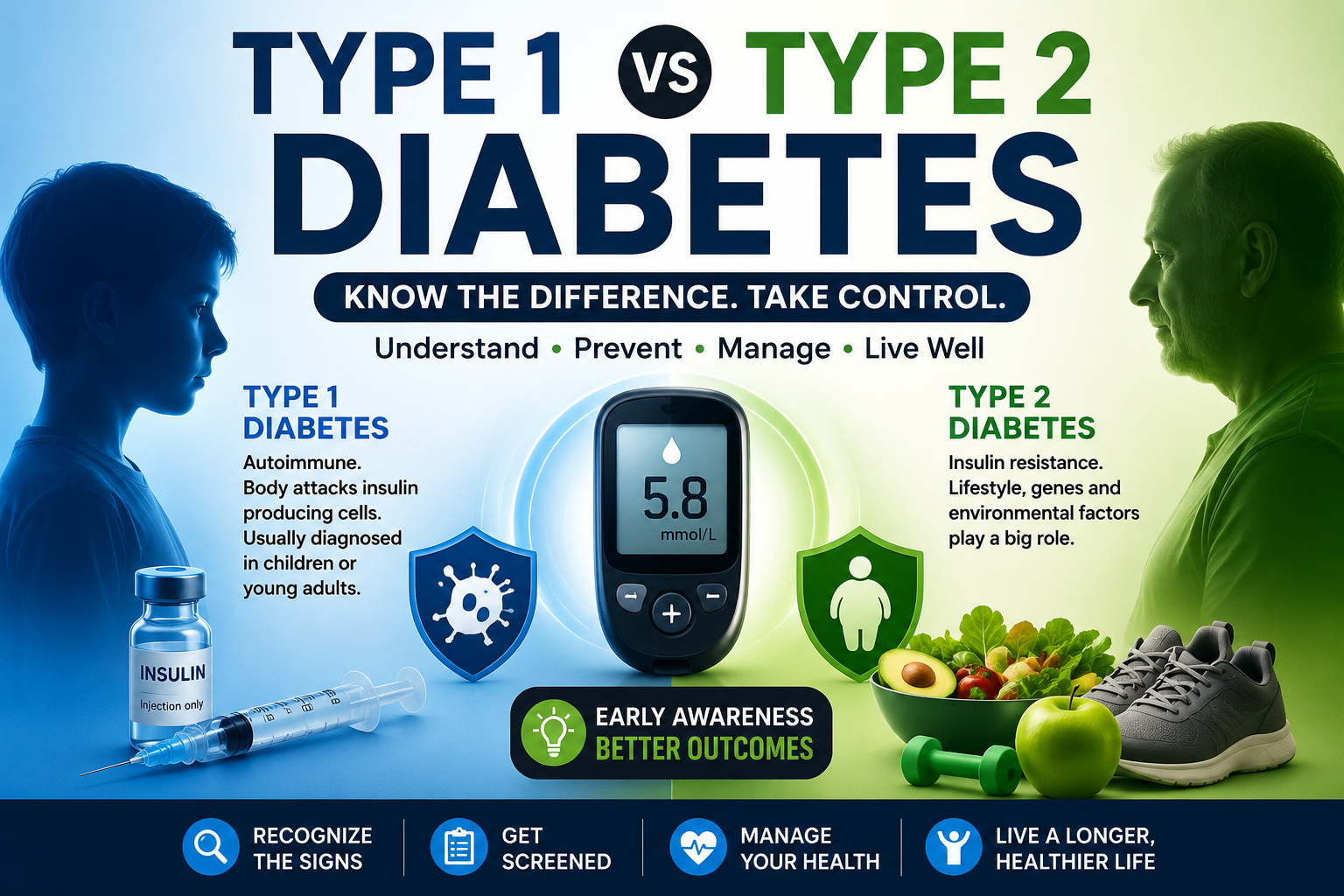
Type 1 vs Type 2 Diabetes: What's the Difference?
Although both conditions are called diabetes, they are very different diseases.
Although their causes differ, both conditions require ongoing medical care and blood sugar management to reduce the risk of complications.
How Is Diabetes Diagnosed?
Doctors may diagnose diabetes using one or more of the following tests.
HbA1c
HbA1c reflects your average blood sugar level over the past two to three months.
It is one of the most commonly used tests for diagnosing and monitoring diabetes.
General interpretation:
- Below 5.7% – Normal
- 5.7% to 6.4% – Prediabetes
- 6.5% or above – Diabetes
Your doctor will interpret the results alongside your medical history and any symptoms you may have.
Fasting Blood Glucose
This test measures your blood sugar after fasting for at least eight hours.
Elevated fasting blood glucose may indicate prediabetes or diabetes.
Oral Glucose Tolerance Test (OGTT)
During this test, your blood sugar is measured before and after drinking a glucose solution.
It helps evaluate how well your body processes sugar and is commonly used during pregnancy or when diabetes is suspected but other test results are inconclusive.
Random Blood Glucose
In some situations, diabetes can also be diagnosed using a random blood glucose test, particularly when classic symptoms of diabetes are present.
Can Type 2 Diabetes Be Prevented?
While Type 1 diabetes cannot currently be prevented, many cases of Type 2 diabetes can be delayed—or even prevented—through healthy lifestyle habits.
These include:
- Maintaining a healthy body weight
- Exercising regularly
- Eating a balanced diet rich in vegetables, whole grains, lean protein, and healthy fats
- Limiting sugary drinks and highly processed foods
- Getting enough sleep
- Managing stress
- Attending regular health screenings
Small, sustainable lifestyle changes often have a greater long-term impact than dramatic short-term changes.
Living Well with Diabetes
Receiving a diagnosis of diabetes can feel overwhelming, but it does not mean you cannot live a healthy and fulfilling life.
Modern diabetes care has improved tremendously over the past decade.
With the right combination of:
- Personalised medical care
- Healthy nutrition
- Regular exercise
- Blood sugar monitoring
- Education and support
many people successfully manage their diabetes while reducing their risk of long-term complications.
The earlier diabetes is detected, the more opportunities there are to protect your health.
When Should You See a Doctor?
Consider speaking with your healthcare provider if you experience:
- Frequent thirst
- Frequent urination
- Unexplained weight loss
- Persistent fatigue
- Blurred vision
- Slow healing wounds
- A strong family history of diabetes
- Previous gestational diabetes
- High blood pressure or high cholesterol
- Overweight or obesity
Even if you feel well, routine health screening can help detect diabetes before symptoms appear.
Final Thoughts
Diabetes is a complex condition, but understanding how it develops is the first step toward protecting your health.
Although Type 1 and Type 2 diabetes both result in high blood sugar levels, they have very different causes and require different treatment approaches.
The encouraging news is that many cases of Type 2 diabetes can be delayed or prevented through healthy lifestyle choices, while early diagnosis and appropriate treatment can help people with all types of diabetes live long, active, and healthy lives.
If you have concerns about your blood sugar or are at risk of developing diabetes, speak with your healthcare provider about appropriate screening and personalised advice.
Remember, early action can make a significant difference to your long-term health.
Common questions
Frequently asked questions
What is the difference between Type 1 and Type 2 diabetes?
Type 1 diabetes is an autoimmune condition where the body produces little or no insulin. Type 2 diabetes develops when the body becomes resistant to insulin and gradually cannot produce enough to maintain normal blood sugar levels.
Can Type 2 diabetes be prevented?
Many cases of Type 2 diabetes can be delayed or prevented through maintaining a healthy weight, regular physical activity, and healthy eating habits.
Can diabetes be cured?
Currently, Type 1 diabetes cannot be cured. Some people with Type 2 diabetes may achieve remission through significant lifestyle changes and appropriate medical care.
References
Sources