Understanding the Glycemic Index: Simple Swaps for Better Blood Sugar Control
Learn how the Glycemic Index works and how simple dietary swaps can help smooth out sharp post-meal blood sugar spikes.

What Is the Glycemic Index?
The Glycemic Index (GI) ranks carbohydrate-containing foods based on how quickly and significantly they raise blood glucose levels compared to pure glucose (which has a rating of 100).
High vs. Low Glycemic Index Foods
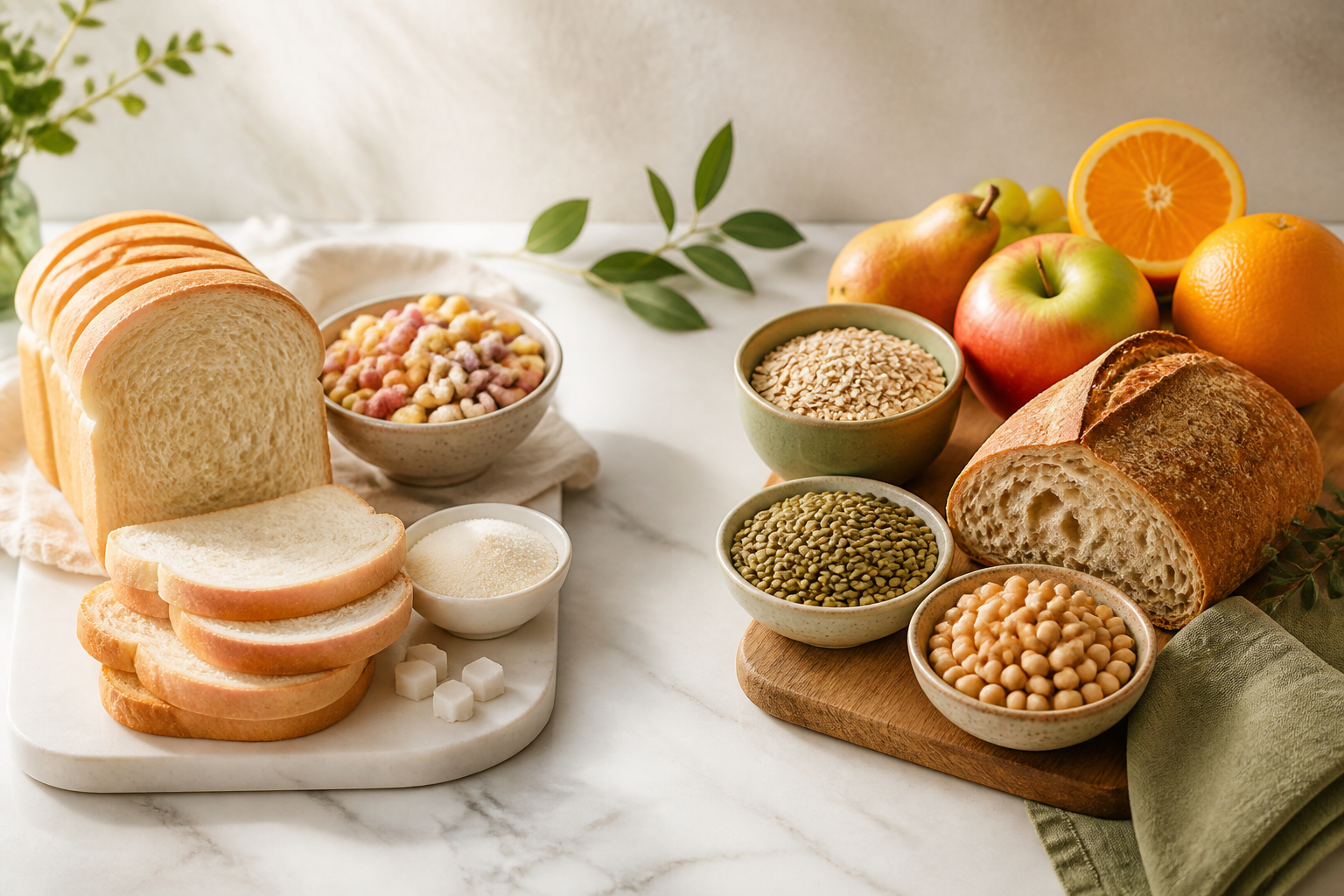
- High GI (70+): Quickly digested, leading to rapid spikes and crashes in blood sugar (e.g., white bread, sugary cereals, soda, instant white rice).
- Medium GI (56–69): Moderate digestion rate (e.g., basmati rice, rolled oats, sweet corn).
- Low GI (55 or less): Slowly digested and absorbed, causing a gradual rise in glucose (e.g., lentils, chickpeas, steel-cut oats, non-starchy vegetables).
5 Practical Low-GI Food Swaps
- Swap Instant Oatmeal for Steel-Cut Oats: Less processed oats retain their fiber structure, lowering the glycemic response.
- Swap White Rice for Basmati or Wild Rice: Basmati rice has a lower GI than short-grain white rice.
- Swap Potato Chips for Roasted Chickpeas: Delivers crispiness along with fiber and plant-based protein.
- Swap White Bread for Sourdough or Whole Kernel Bread: Fermentation in sourdough alters starch structure, lowering its GI value.
- Swap Sugary Fruit Juices for Whole Fruits: Whole fruits retain natural dietary fiber that buffers sugar absorption.
Common questions
Frequently asked questions
What is considered a low Glycemic Index score?
Foods with a GI score of 55 or less are considered low Glycemic Index.
Does cooking method affect GI value?
Yes. Overcooking pasta or potatoes breaks down starches, increasing their GI score.
References